
Ford Mustang (1999-2004) Service Manual: Removal
1. Remove the upper intake manifold. For additional information, refer to Upper Intake Manifold in this section.
2. Partially drain the cooling system. For additional information, refer to Section.
3. Relieve the fuel system pressure. For additional information, refer to Section.
4. Disconnect the fuel rail pressure (FRP) sensor electrical connector and vacuum hose.
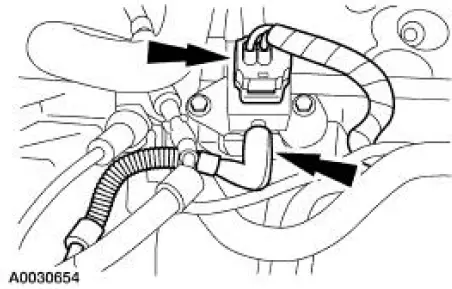
5. Disconnect the fuel supply tube spring lock coupling. For additional information, refer to Section.
6. Disconnect and position the engine wire harness aside.
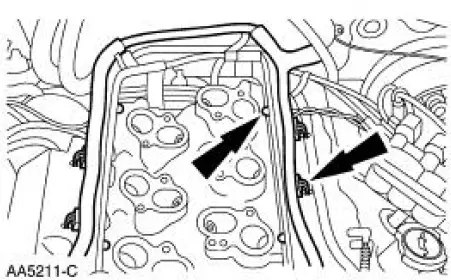
7. Disconnect the intake manifold runner control (IMRC) electrical connector.
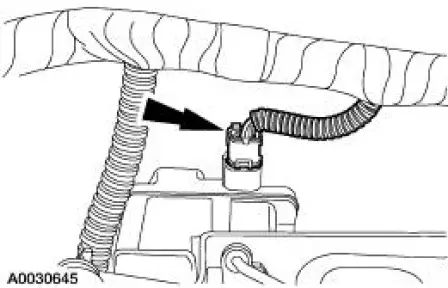
8. Remove the heater bypass tube. For additional information, refer to Section.
9. Disconnect the heater hose.
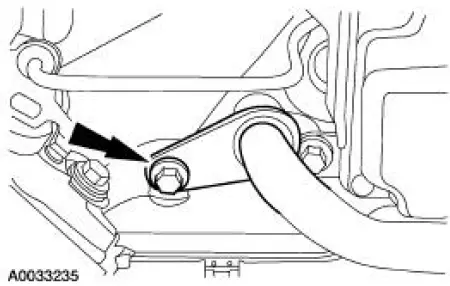
10. Disconnect the exhaust gas recirculation (EGR) vacuum tube.
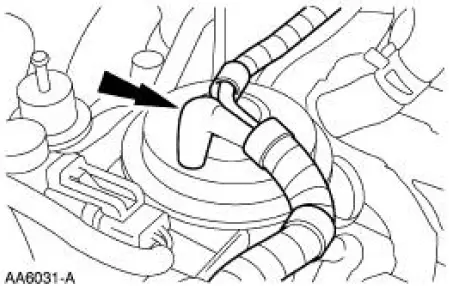
11. Disconnect the EGR tube from the EGR valve.
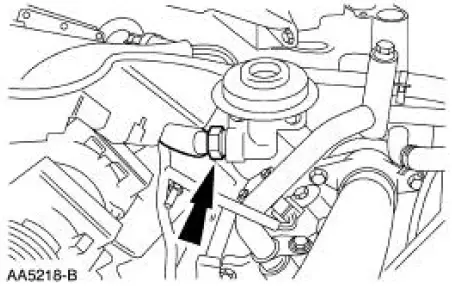
12. Disconnect the radiator upper hose and coolant bypass hose.
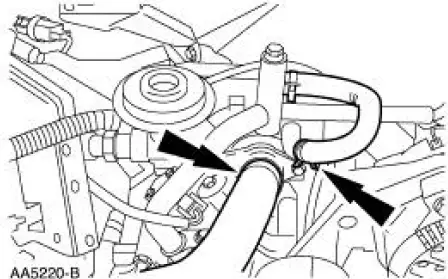
13. Disconnect the electrical connector.
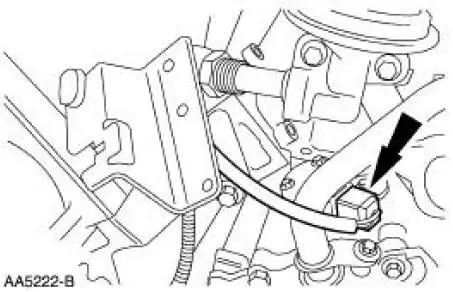
14. NOTE: Remove the fuel injection supply manifold and fuel injectors as an assembly.
Remove the bolts and the fuel injection supply manifold.
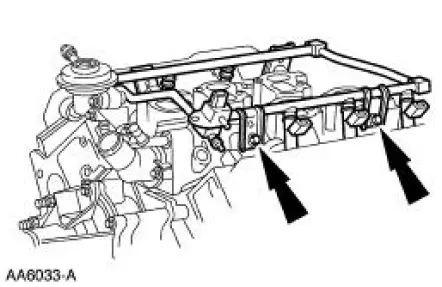
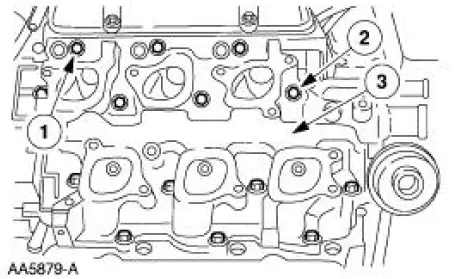
15. NOTE: For ease in installation, record the location of the short bolts and the long bolts.
Remove the lower intake manifold.
1. Remove the eight short bolts.
2. Remove the six long bolts.
3. Remove the lower intake manifold.
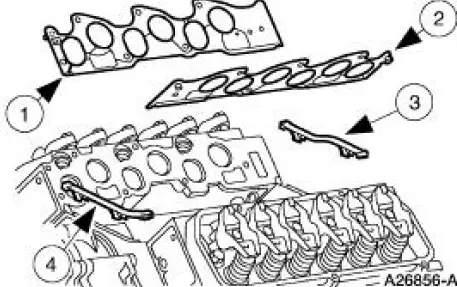
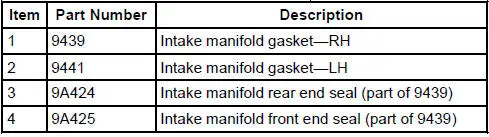
16. Remove and discard the intake manifold gaskets.
 Lower Intake Manifold
Material
...
 Installation
1. NOTE: If the lower intake manifold is not secured within four
minutes, the sealant must be
removed and the sealing area cleaned with metal surface cleaner. Allow to
dry until there is no
sign ...
Other materials:
Supercharger Cooling
General Specifications
a - Use the same type coolant that was drained from the cooling system.
Do not mix coolant types.
b - The addition of Motorcraft Cooling System Stop Leak Pellets, VC-6,
darkens Motorcraft Premium
Gold Engine Coolant from yell ...
Camshaft Runout
Special Tool(s)
Dial Indicator Gauge with
Holding Fixture
100-002 (TOOL-4201-C) or
equivalent
1. NOTE: Camshaft journals must be within specifications before
checking runout.
Use a Dial Indicator Gauge with Holding Fixture to measure the ...
System Air Flow Description
MAX A/C
When MAX A/C is selected:
The air inlet door vacuum control motor is at full vacuum, closing
off outside air and admitting
only recirculated air.
The panel/defrost door vacuum control motor is at full vacuum and
the panel/floor door vacu ...
