
Ford Mustang (1999-2004) Service Manual: Connecting Rod - Side Clearance
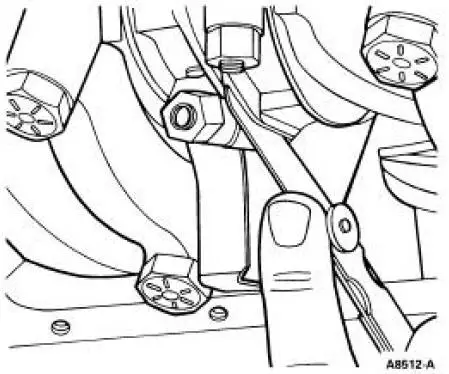
1. Measure the clearance between the connecting rod and the crankshaft. Verify the measurement is within specification.
- Refer to the appropriate section in Group for the procedure.
- If out of specification, install new components as necessary. Refer to the appropriate section in Group for the procedure.
Roller Follower -Inspection
Push rod engines
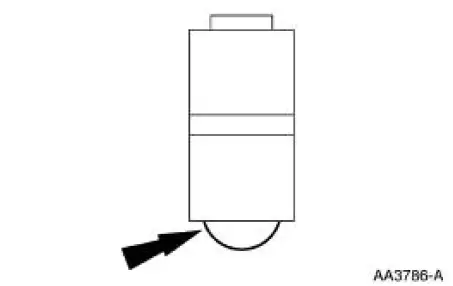
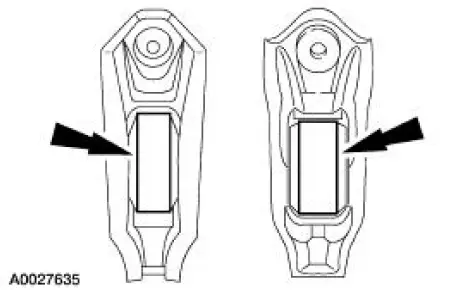
1. Inspect the roller for flat spots or scoring. If any damage is found, inspect the camshaft lobes and valve tappet for damage.
OHC engines
Valve Tappet -Inspection
Push rod engines
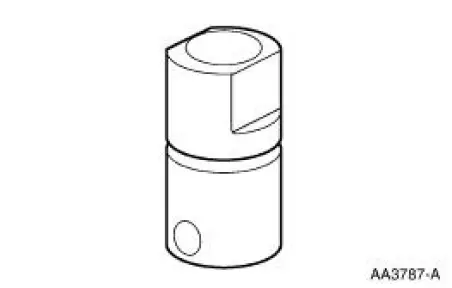
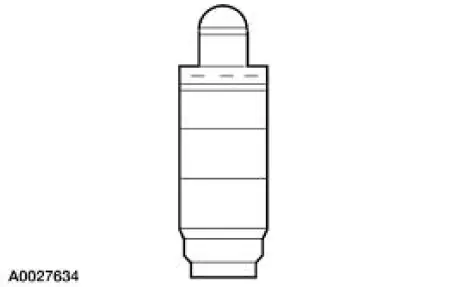
1. Inspect the hydraulic valve tappet and roller for damage. If any damage is found, inspect the camshaft lobes and valves for damage.
OHC engines
Valve -Stem Diameter
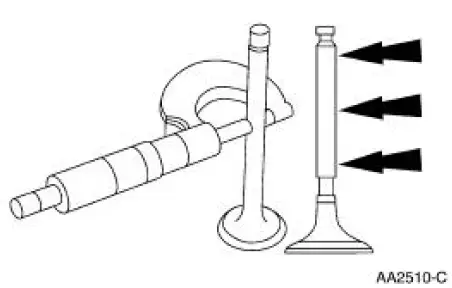
1. Measure the diameter of each intake and exhaust valve stem at the points shown. Verify the diameter is within specification.
- Refer to the appropriate section in Group for the procedure.
- If out of specification, install new components as necessary. Refer to the appropriate section in Group for the procedure.
 Connecting Rod - Bearing Journal Clearance
Special Tool(s)
Plastigage
303-D031 (D81L-6002-B) or
equivalent
NOTE: The crankshaft connecting rod journals must be within
specifications to check the connecting
rod bearing journa ...
 Valve Stem to Valve Guide Clearance
Special Tool(s)
Dial Indicator Gauge with
Holding Fixture
100-002 (TOOL-4201-C) or
equivalent
Clearance Gauge, Valve Guide
303-004 (TOOL-6505-E) or
equivalent
NOTE: Valve ...
Other materials:
Installation
1. Align the center mark on the cover assembly to the V-notch on the rear
glass assembly and
staple the entire length of the number four bow.
2. Center the listing sleeve on the bottom of the folding top number two bow.
3. Position the listing sleeve onto ...
Removal
WARNING: Do not smoke or carry lighted tobacco or open flame of any
type when
working on or near any fuel related components. Highly flammable mixtures are
always present
and may be ignited. Failure to follow these instructions may result in personal
injury ...
Module - Daytime Running Lamps (DRL)
Removal
1. CAUTION: Electronic modules are sensitive to static electrical
charges. If exposed
to these charges, damage can result.
Disconnect the battery ground cable.
2. Remove the daytime running lamps (DRL) module and bracket assembly
(15A270).
...
