
Ford Mustang (1999-2004) Service Manual: Module Configuration
Module Configuration (Diagnosis and Testing)
Special Tool(s)
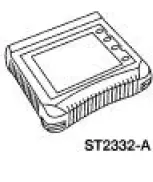 |
Worldwide Diagnostic System (WDS) 418-F224 New Generation STAR (NGS) Tester 418-F052 or equivalent diagnostic tool |
Principles of Operation
Some modules must be programmed as part of the repair procedure. If this procedure is not followed the module will not function correctly and may set a number of DTCs, including B2477 or P1639, which indicate that some necessary data has not been programmed into the module.
Modules that need programming should not be exchanged between vehicles. In most cases the parameter values or settings are unique to that vehicle, and if not set correctly will cause concerns or faults.
Some programmable parameters, such as belt minder on/off, can be changed from the factory setting at the customer's request.
WDS will automatically attempt to retrieve the module configuration information from all modules, and from a backup location in the powertrain control module (PCM) when vehicle ID is carried out. If the module and the PCM do not contain correct information the diagnostic tool will either request "As Built" data or display a list of items that you will need to manually configure. The diagnostic tool will program the module based on the data you enter.
There are three different methods that are used for module programming:
- programmable module installation (PMI)
- calibration update
- programmable parameters
Some modules do not support all three methods.
Programmable Module Installation (PMI)
The programmable module installation (PMI) method is used when a new programmable module is installed on the vehicle. It is no longer necessary to command the diagnostic tool to gather module option content from the old module. The diagnostic tool automatically obtains any available module option content information from the old module during the vehicle ID routine that runs when the diagnostic tool is initially connected to the vehicle. It is important that you connect WDS to the vehicle and allow it to identify the vehicle and obtain configuration data prior to removing any modules.
Calibration Update
Calibration update is used to install a new calibration and strategy into a module. The updates are usually issued to fix a concern in the module software and would normally be addressed by a technical service bulletin (TSB). This method has been used by the PCM for several years. Other modules will be adopting this strategy as well.
Programmable Parameters
This method is used to configure parameters that can be modified in service. These are typically at the preference of the customer. Not all features controlled by the module are listed in this configuration method. Refer to the Module Configuration Index for a list of features by system.
If a module that has been modified using programmable parameters needs to be installed, the PMI procedure will maintain the parameters in their altered state if WDS is able to communicate with the old module during Vehicle ID. Otherwise you may need to use programmable parameters to return them to the altered state.
Vehicle Identification (VID) Block
Some PCMs contain a memory area called a vehicle identification (VID) block. The VID block is used to store backup data for each programmable module, as well as, powertrain configuration information.
If the diagnostic tool cannot retrieve module option content information from the suspect module, the diagnostic tool will attempt to extract backup information from the PCM's VID block.
The PCM VID block contains the factory settings for the configurable modules unless the PCM is flashed with a new calibration, in which case some PCM parameters may be modified.
As-Built Data Center
The As-Built Data Center maintains a record of the vehicle configuration in a database. The vehicle's VIN is required to obtain this information. The As-Built Data Center records the applicable module configurations stored in each module before the vehicle leaves the factory. The As-Built Data Center will always reflect the original build of the vehicle as it left the factory. Only contact the As-Built Data Center when directed to do so by the diagnostic tool.
Inspection and Verification
1. Visually inspect for obvious signs of electrical damage. Refer to the following chart:
Visual Inspection Chart
| Electrical |
|
Configurable Modules
The vehicle contains the following modules that are configurable:
- generic electronic module (GEM)
Programmable Parameters Index
| System | Programmable Parameter Items |
| Warnings & Chimes | Belt Minder |
 Communication Circuit Wiring Repair
Special Tool(s)
Heat Gun
107-R0300 or equivalent
1. Disconnect the battery ground cable. For additional information, refer to
Section.
2. Strip the wires.
3. NOTE: Use rosin core m ...

Other materials:
Extension Housing Seal and Gasket
Special Tool(s)
Slide Hammer
100-001 (T50T-100-A)
Installer, Transmission
Extension Housing Fluid Seal
308-002 (T61L-7657-A)
Remover, Transmission Fluid
Seal
307-048 (T74P-77248-A)
Removal
1. Drain the transmiss ...
Engine Mount
Special Tool(s)
Support Bracket, Engine
303-639
3-Bar Engine Support Kit
303-F072
Alignment Tool, Subframe
502-004
...
Switch - Window Regulator Control
Removal
1. CAUTION: Use a shop towel or similar material between the
tool and the door trim
panel or damage to the door trim panel may occur.
Position the window regulator switch plate aside.
1. Pull at the service notch.
2. Lift to release ...
