
Ford Mustang (1999-2004) Service Manual: Toe Adjustment - Front
1. Start the engine and center the steering wheel.
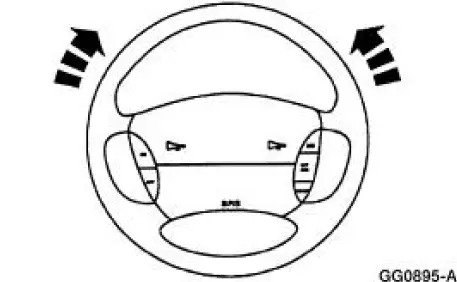
2. Turn the engine off, and hold the steering wheel in the straight forward position by attaching a rigid link from the steering wheel to the seat.
3. Check the toe settings. Follow the manufacturer's instructions.
4. Remove the clamps.
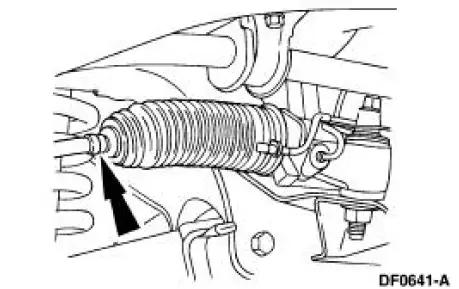
5. Loosen the nuts.
- Clean and lubricate the nut(s) and front wheel spindle tie-rod threads.
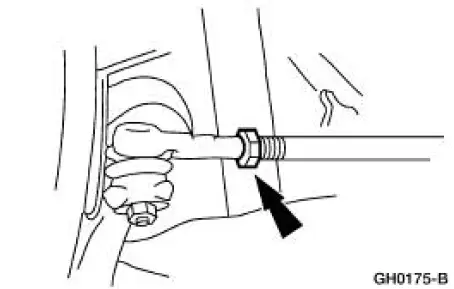
6. NOTE: Do not allow the steering gear bellows to twist when the front wheel spindle tie-rod (3280) is rotated.
Rotate the front wheel spindle tie-rods.
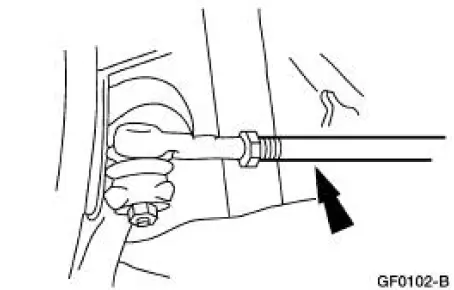
7. Tighten the nuts.
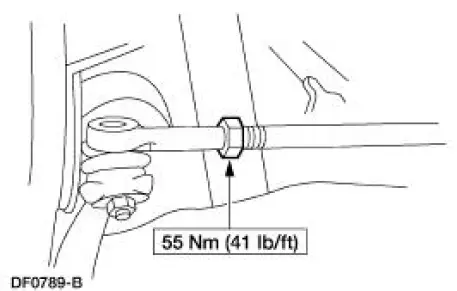
8. Install the clamps.
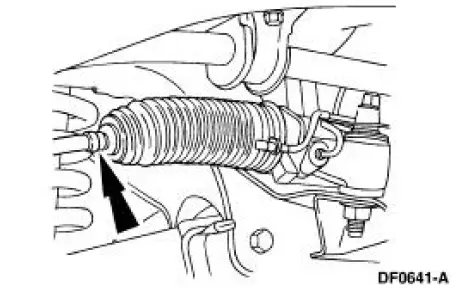
9. Recheck the toe settings. Follow the manufacturer's instructions.
 Camber Adjustment - Rear
1. Loosen the nut.
2. Rotate the bolt and the cam to the correct camber setting.
3. Tighten the nut while holding the bolt and the cam stationary.
4. Recheck the wheel alignment. Follow the manu ...
 Toe Adjustment - Rear
1. Loosen the nuts.
To prevent damage to the ball joints, hold the tie-rod ends while
loosening the nuts.
2. Rotate the toe link to the correct toe setting.
3. Tighten the nuts.
To ...
Other materials:
Removal
CAUTION: Since the engine is not free-wheeling, if the crankshaft or
the camshafts are
moved in any manner during removal and installation, the crankshaft and the
camshafts must
be re-synchronized.
1. Remove the engine front cover. For additional informatio ...
Axle Housing
Removal and Installation
1. CAUTION: The vehicle must be on level ground and at curb height.
Mark the rear shock absorbers relative to their protective sleeve.
During installation, raise the suspension to this reference mark
before tightening the
s ...
Transmission (Disassembly)
Special Tool(s)
Bearing Puller
205-D064 (D84L-1123-A) or
Equivalent
Front Hub Tool
204-069 (T81P-1104-C)
Holding Fixture
307-003 (T57L-500-B)
Impact Slide Hammer
100-001 (T50T-100-A)
Puller
...
