
Ford Mustang (1999-2004) Service Manual: Disassembly
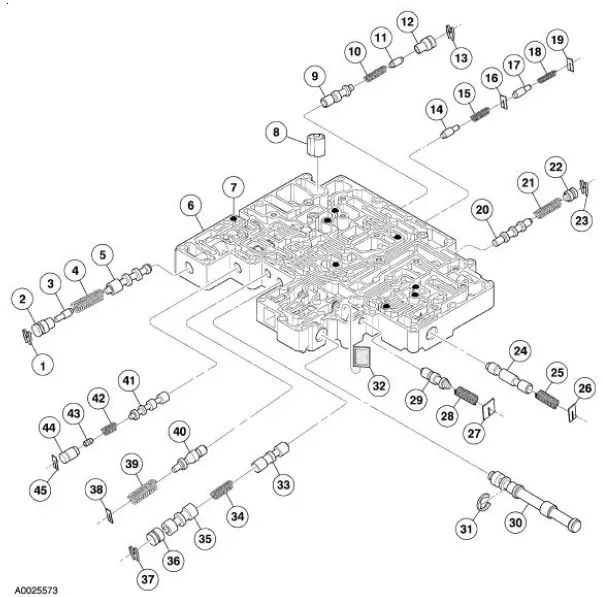
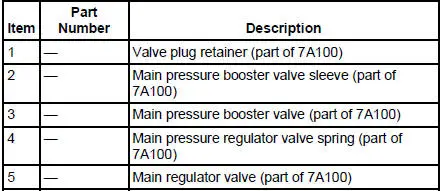
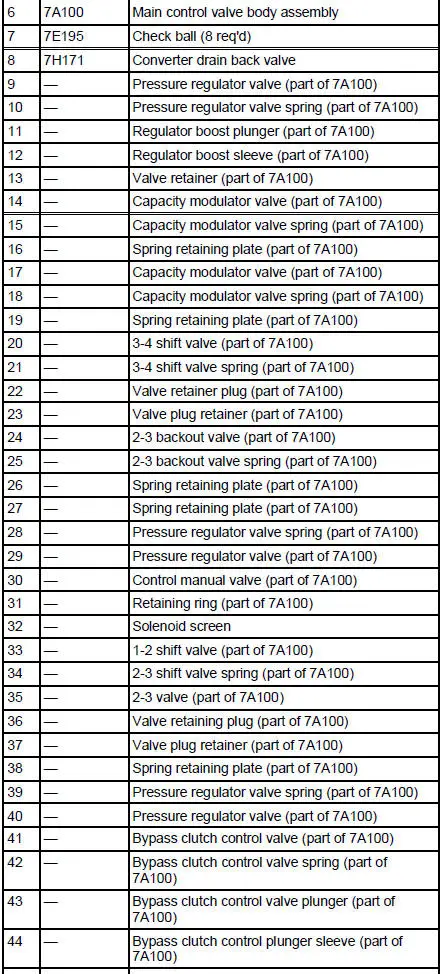
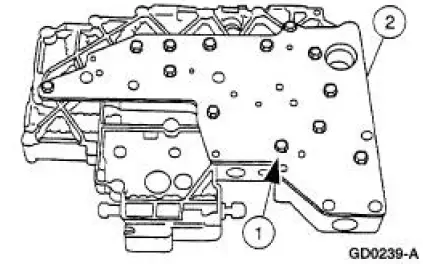
Main Control Valve Body - Disassembled View

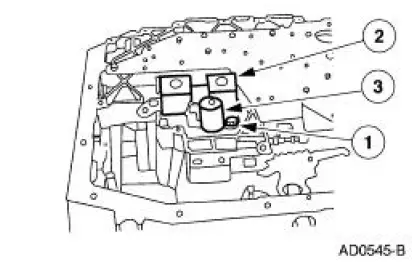
1. Remove the torque converter clutch (TCC) solenoid and the shift solenoid.
1. Remove the bolt.
2. Remove the shift solenoid.
3. Remove the TCC solenoid.
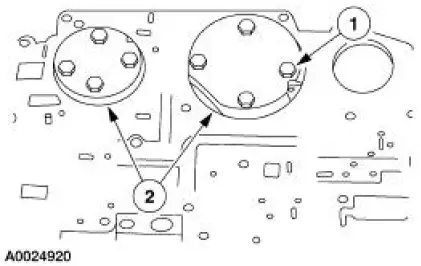
2. Remove the two reinforcement plates.
1. Remove the bolts.
2. Remove the plates.
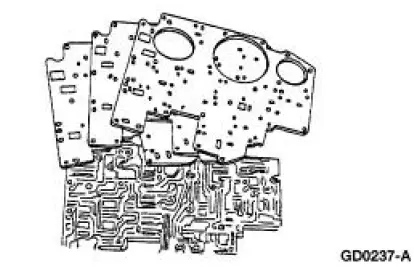
3. Remove the separator plate and discard the gaskets.
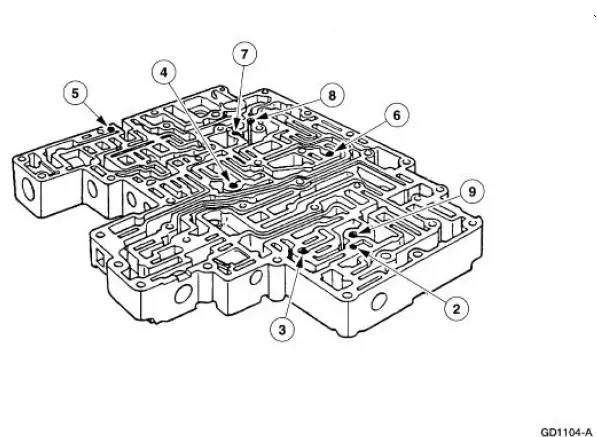
4. NOTE: Note the location of the eight coasting booster valve shuttle balls for assembly.
Remove the eight coasting booster valve shuttle balls.
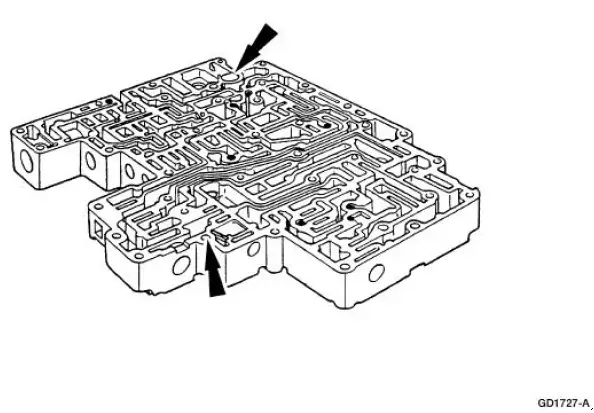
5. Remove the converter drain back valve and solenoid pressure supply screen.
6. Remove the main control valve body cover plate.
1. Remove the 13 bolts.
2. Remove the valve body cover plate and gasket.

 Assembly
1. CAUTION: Before beginning assembly, carry out and inspect the
following:
When building up subassemblies and assembling the transmission, ALWAYS use new
gaskets and seals.
All fasteners must be ti ...
Other materials:
Fuel Charging Wiring Harness
Removal and Installation
WARNING: Do not smoke or carry lighted tobacco or open flame of any
type when
working on or near any fuel related components. Highly flammable mixtures are
always present
and can ignite. Failure to follow these instructions can resul ...
Condenser Core
Material
Item
Specification
PAG Refrigerant Compressor
Oil (R-134a Systems)
F7AZ-19589-DA (Motorcraft YN-
12-C)
WSH-M1C231-
B
Removal and Installation
NOTE: If an A/C condenser core leak is suspected, the A/C condenser
core must be l ...
Manual
WARNING: Brake fluid contains polyglycol ethers and polyglycols.
Avoid contact with
eyes. Wash hands thoroughly after handling. If brake fluid contacts
eyes, flush eyes with
running water for 15 minutes. Get medical attention if irritation
persist ...
