
Ford Mustang (1999-2004) Service Manual: Installation
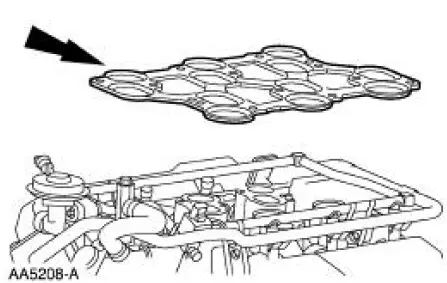
1. Install a new upper intake manifold gasket.
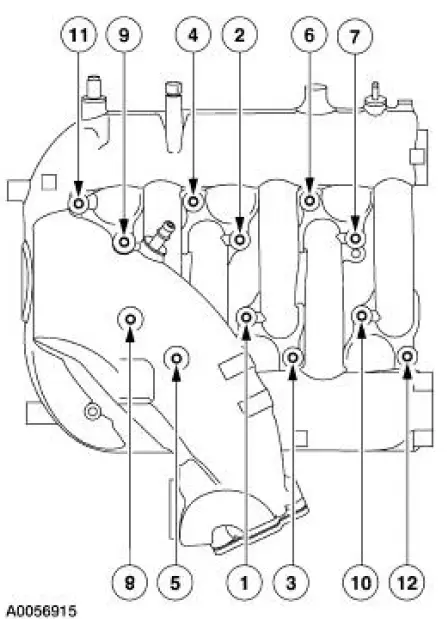
2. NOTE: Refer to the location note made during removal and make sure the bolts are installed in the correct locations.
Install the upper intake manifold. Tighten the bolts in two stages in the sequence shown.
- Stage 1: Tighten to 10 Nm (89 lb-in).
- Stage 2: Rotate an additional 90 degrees (1/4 turn).
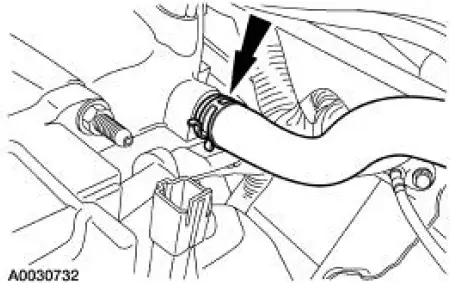
3. Connect the vacuum hose.
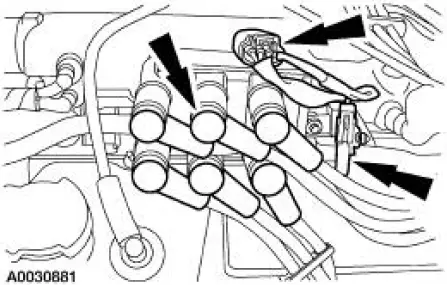
4. Connect the following:
- Ignition coil electrical connector.
- Radio interference capacitor electrical connector.
- Spark plug wires.
5. Connect the vacuum hoses.
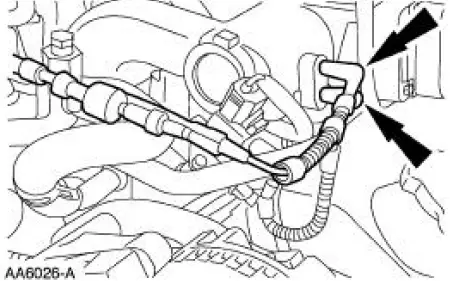
6. Connect the PCV tube.
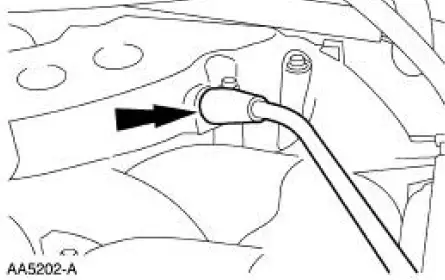
7. Connect the differential pressure feedback EGR system electrical and vacuum connections.
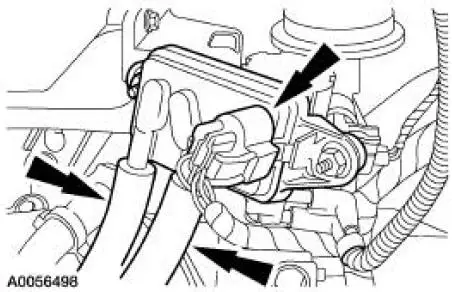
8. Connect the EGR vacuum regulator solenoid electrical and vacuum connections.
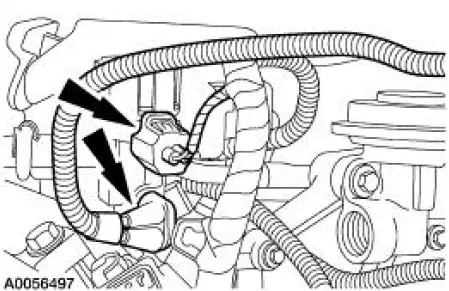
9. Position the accelerator cable bracket and install the bolts.
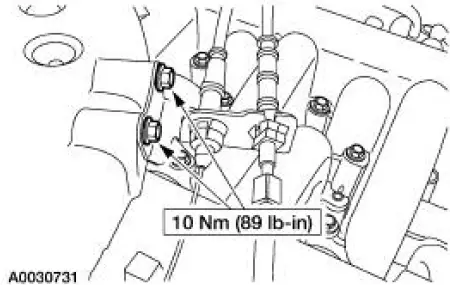
10. Connect the accelerator and speed control cables to the throttle body cam.
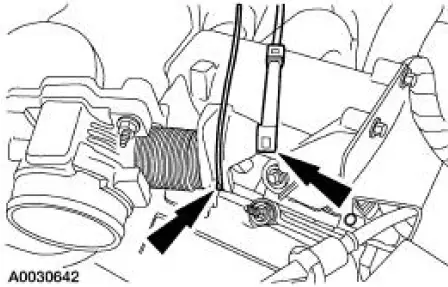
11. Connect the EVAP return tube and the TP sensor electrical connector.
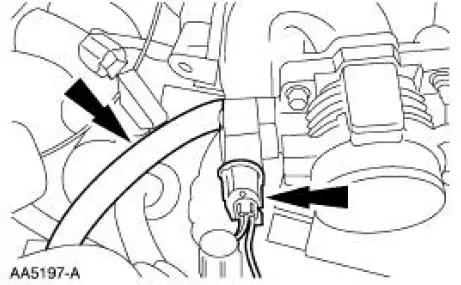
12. Connect the vacuum hose and the IAC valve electrical connector.
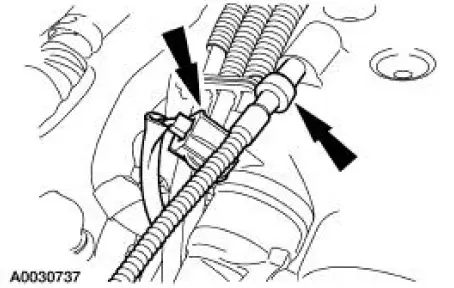
13. Install the engine air cleaner outlet pipe. For additional information, refer to Section .
14. Connect the battery ground cable. For additional information, refer to Section .
 Removal
1. Disconnect the battery ground cable. For additional information, refer
to Section.
2. Remove the engine air cleaner outlet pipe. For additional information,
refer to Section.
3. Disconnect ...
 Lower Intake Manifold
Material
...
Other materials:
Adjusting the headlamps
The headlamps on your vehicle are properly aimed at the assembly plant.
If your vehicle has been in an accident, an authorized dealer should
check the alignment of your headlamps.
Vertical Aim Adjustment
1. Park the vehicle directly in front of a wall or scre ...
Ignition Switch Lock Cylinder - Functional
Removal and Installation
1. Disconnect the battery ground cable.
2. Remove the ignition switch lock cylinder (11582).
1. Insert the ignition key and turn to the RUN position.
2. Using a 1/8-inch drift, press the ignition switch lock cylinder release
...
Flexplate
Removal and Installation
1. Remove the transmission. For additional information, refer to Section.
2. Remove the six bolts retaining the flexplate to crankshaft, and remove the
flexplate.
3. To install, reverse the removal procedure.
Tighten the bolts in ...
