
Ford Mustang (1999-2004) Service Manual: Muffler - 4.6L (4V)
Removal and Installation
1. Raise and support the vehicle. For additional information, refer to Section.
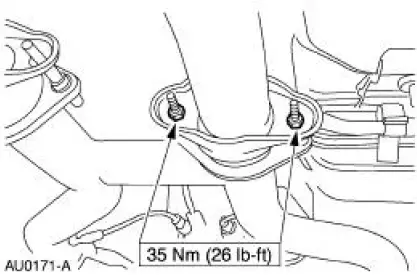
2. NOTE: RH side shown, LH side similar.
Remove the dual converter assembly nuts.
3. Remove the RH exhaust hanger insulator (5260).
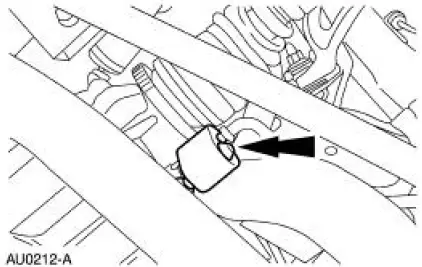
4. Remove the LH exhaust hanger insulator (5260).
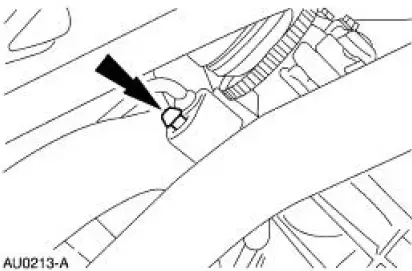
5. Remove the RH intermediate exhaust pipe hanger insulator.
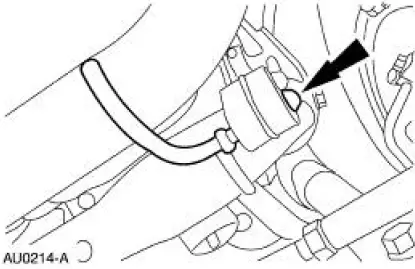
6. Remove the LH exhaust pipe hanger insulator.
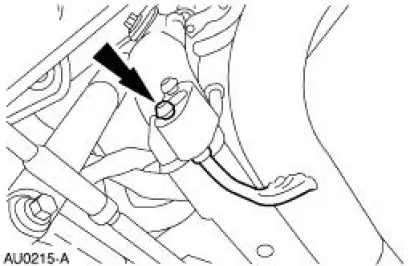
7. Remove the RH exhaust pipe hanger insulator.
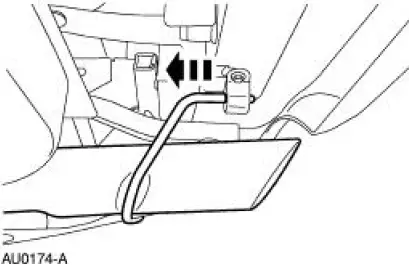
8. Remove the LH exhaust pipe hanger insulator.
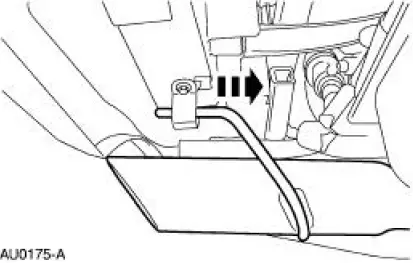
9. Remove the RH and LH mufflers.
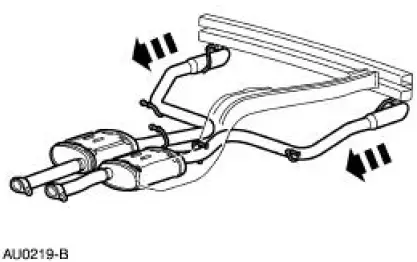
10. CAUTION: Do not use oil or grease-based lubricants on the insulators as they deteriorate the rubber.
NOTE: A soap-and-water solution will ease installation of the exhaust hanger insulators.
To install, reverse the removal procedure.
 Muffler - 4.6L (2V)
Removal and Installation
1. Use a jack to support and lower the rear axle.
2. Remove the upper arm-to-differential bolt.
3. Remove the nut and bolt, and disconnect the rear shock absorbers (18124) ...
 Dual Converter Y-Pipe - 3.8L
Removal
NOTE: The RH and LH catalytic converters are serviceable separately.
1. Raise and support the vehicle. For additional information, refer to
Section.
2. CAUTION: When repairing the exhaust sys ...
Other materials:
Brake Booster - Vacuum (Description and Operation)
Power Brake Booster
The vacuum type power brake booster (2005):
is a dual diaphragm, vacuum assisted power brake booster
reduces brake pedal force and travel distance.
is located on the LH side of the bulkhead in the engine compartment,
be ...
Removal
1. Disconnect the battery ground cable (14301).
2. Remove the air cleaner outlet tube (9B659).
3. Remove the radiator sight shield (8C291).
4. Remove the coolant recovery reservoir (8A080).
1. Disconnect the hose.
2. Remove the bolts.
3. Remo ...
Pinpoint Test P: No Communication With The Restraints Control Module
Normal Operation
The RCM communicates with the scan tool using ISO 9141 communication mode
through the data link
connector (DLC).
Possible Causes
A no communication condition can be caused by:
damage to circuit 70 (LB/WH).
a damaged DLC.
a damage ...
