
Ford Mustang (1999-2004) Service Manual: Powertrain Control Module (PCM)
Removal
1. Disconnect the battery ground cable. For additional information, refer to Section.
2. Remove the RH front door scuff plate.
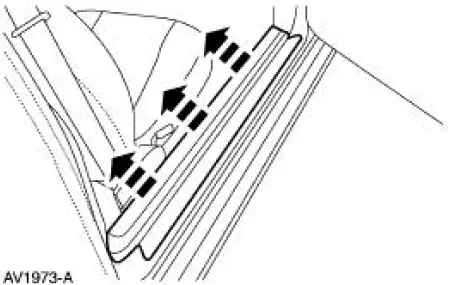
3. Remove the RH cowl side trim panel.
- Remove the pin-type retainer.
- Remove the panel.
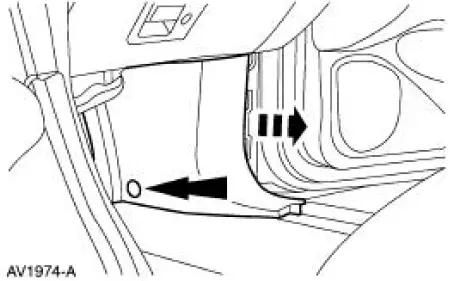
4. Disconnect the connectors and position them aside.
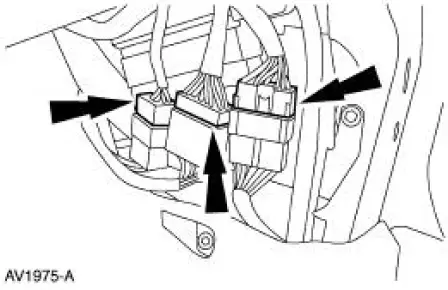
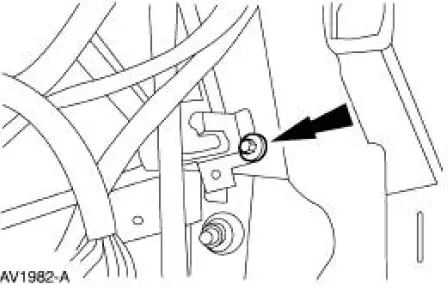
5. Remove the bolts and the bracket.
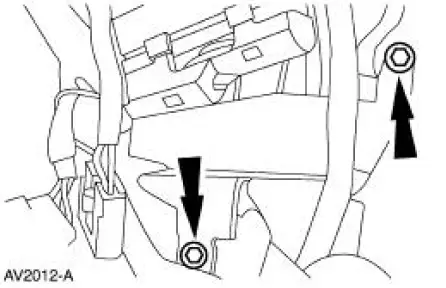
6. Loosen the bolt and remove the connector.
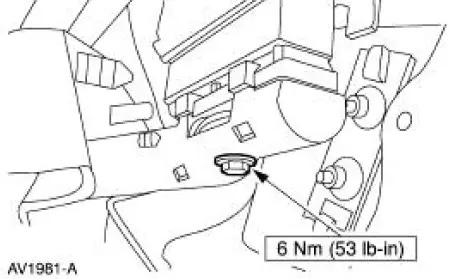
7. Remove the bolt and the powertrain control module (PCM).
Installation
1. To install, reverse the removal procedure.
 Crankshaft Position (CKP) Sensor - 4.6L
Removal
1. Disconnect the battery ground cable. For additional information,
refer to Section.
2. Remove the A/C compressor. For additional information, refer to
Section.
3. Remove the cr ...
 Throttle Position (TP) Sensor
Removal
NOTE: The 3.8L engine is shown; the 4.6L (2V) is similar.
1. Disconnect the battery ground cable. For additional information,
refer to Section.
2. Remove the throttle position (TP) s ...
Other materials:
Removal
WARNING: Always wear safety glasses when repairing an air bag
supplemental restraint
system (SRS) vehicle and when handling an air bag module. This will
reduce the risk of injury
in the event of an accidental deployment.
WARNING: Carry a live air ...
Sun visors
Slide-On-Rod
Rotate the visor toward the side
window and extend it rearward for
extra sunlight coverage.
Retract the visor before moving it
back toward the windshield and
storing it.
Illuminated Visor Vanity Mirror
Lift the cover to switch on the lamp.
Flex ...
Component Tests
Starter Motor -Voltage Drop Test
WARNING: When servicing starter motor or carrying out other underhood
work in the
vicinity of the starter motor, be aware that the heavy gauge battery input lead
at the starter
solenoid is "electrically hot" at all times. A p ...
