
Ford Mustang (1999-2004) Service Manual: Key Programming - Program a Key Using Two Programmed Keys
Special Tool(s)
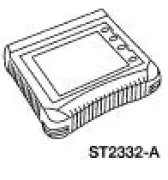 |
Worldwide Diagnostic System (WDS) 418-F224, New Generation STAR (NGS) Tester 418-F052, or equivalent diagnostic tool |
NOTE: This procedure only works if two or more programmed ignition keys are available and it is desired to program additional key(s). If two keys are not available, follow the procedure in Key Programming-Erase All Key Codes and Program Two Keys .
NOTE: PID SPARE_KY must be enabled for this procedure to operate. If this Parameter Identification (PID) Index is not enabled, follow the security access procedure and select Spare Key Programming Switch: Enabled.
NOTE: If the programming procedure is successful, the new key(s) will start the vehicle and the THEFT INDICATOR will illuminate for approximately three seconds.
NOTE: If the programming procedure is not successful, the new key(s) will not start the vehicle and the THEFT INDICATOR will flash. If the programming procedure was not successful, repeat the key programming procedure from Step 1. If the failure repeats, check Circuit 729 (RD/WH) (hot at all times) in instrument cluster for proper battery voltage. Repair the circuit if voltage is not present. For additional information, refer to Diagnosis and Testing to review diagnostic trouble codes (DTCs) and perform pinpoint tests as required.
NOTE: A maximum of eight ignition keys can be programmed to a passive anti-theft system (PATS) equipped vehicle. Use PID NUMKEYS to determine how many keys are programmed to the vehicle.
NOTE: If the steps are not performed as outlined, the programming procedure will end.
NOTE: Ignition keys must have correct mechanical key cut for the vehicle and must be a PATS encoded key.
1. Insert the first programmed ignition key into the ignition lock cylinder and turn the ignition switch from OFF to RUN (maintain the ignition switch in RUN for one second).
2. Turn the ignition switch to OFF and remove the first key from the ignition lock cylinder.
3. Within five seconds of turning the ignition switch to OFF, insert the second programmed ignition key into the ignition lock cylinder and turn the ignition switch from OFF to RUN (maintain the ignition switch in RUN for one second).
4. Turn the ignition switch to OFF and remove the second key from the ignition lock cylinder.
5. Within 10 seconds of turning the ignition lock cylinder to OFF, insert the unprogrammed ignition key (new key) into the ignition lock cylinder and turn the ignition switch from OFF to RUN (maintain the ignition switch in RUN for 1 second).
6. If it is desired to program additional key(s), repeat the key programming procedure from the beginning.
 Key Programming - Erase All Key Codes and Program Two
Keys
Key Programming - Erase All Key Codes and Program Two
Keys
Special Tool(s)
Worldwide Diagnostic System
(WDS)
418-F224,
New Generation STAR (NGS)
Tester
418-F052 or equivalent
diagnostic tool
NOTE: This procedure is used when a custom ...
 Key Programming - Enable/Disable Spare Key
Programming
Key Programming - Enable/Disable Spare Key
Programming
Special Tool(s)
Worldwide Diagnostic System
(WDS)
418-F224,
New Generation STAR (NGS)
Tester
418-F052, or equivalent
diagnostic tool
NOTE: The spare key programming switch is ...
Other materials:
Acceleration Control (Description and Operation)
Component Locations
The throttle is controlled by the accelerator cable which is connected to the
accelerator pedal and
shaft.
The accelerator pedal and shaft should travel smoothly from the idle to
the wide-open throttle
(WOT) positions. Hesi ...
Brake System (Description and Operation)
Component Locations
+
The vehicle is equipped with a vacuum-assisted or a hydro-boost power braking
system.
The braking system is a front-to-rear split hydraulic system.
The front wheel brakes utilize a dual piston brake caliper and disc brake
sy ...
Cooler - Fluid
Removal
1. Raise and support the vehicle.
2. Disconnect the power steering hoses.
3. Remove the bolt and routing bracket.
4. Remove the bolts and the power steering fluid cooler.
Installation
1. To install, reverse the removal procedure.
2. Fill and ...
