
Ford Mustang (1999-2004) Service Manual: Hydro-Boost Bleeding
1. NOTE: The Hydro-Boost power brake booster (2B560) is generally self-bleeding, and the following procedure will normally bleed the air from the power brake booster. Normal operation of the vehicle will further remove any additional trapped air.
Fill the power steering oil reservoir (3A697) with MERCON Multi-Purpose ATF XT-2-QDX or MERCON equivalent.
2. Remove the powertrain control module (PCM) fuse to prevent the engine from starting.
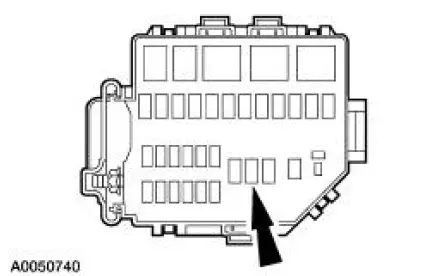
3. Crank the engine for several seconds.
4. Check the fluid level in the power steering oil reservoir and add if necessary. Install the powertrain control module (PCM) fuse.
5. Start the engine.
6. With the engine running, turn the steering wheel (3600) from stop-to-stop twice. Turn the engine off.
7. Depress the brake pedal (2455) several times to discharge the accumulator.
8. Repeat Steps 5 and 6.
9. If foaming occurs, stop the engine and allow the foam to dissipate.
10. Repeat Steps 5 and 6 as required, until all the air is removed from the system (when the foaming stops).
 Brake Booster - Hydro-Boost (Description and Operation)
The Hydro-Boost brake booster is a hydraulically operated brake booster
powered by the power
steering pump (3A674). The power steering pump provides the fluid pressure to
operate both the
power brak ...
 Brake Booster - Vacuum (Removal and Installation)
Removal
1. Disconnect the battery ground cable (14301).
2. Remove the air cleaner housing.
3. Remove the brake master cylinder nuts.
4. Position the brake master cylinder (2140) aside.
5. W ...
Other materials:
Removal
WARNING: Always wear safety glasses when repairing an air bag
supplemental restraint
system (SRS) vehicle and when handling an air bag module. This will
reduce the risk of injury
in the event of an accidental deployment.
WARNING: Carry a live air ...
Rocker Arms - Inspection
CAUTION: Do not attempt to true surfaces by grinding. Check the
rocker arm pad, side
rails and seat for excessive wear, cracks, nicks or burrs. Check the rocker
arm seat bolt for
stripped or broken threads. Install new components as ncessary or possible ...
Air Bag Disposal - Driver, Undeployed, Scrapped
Vehicle
Remote Deployment
WARNING: Always wear safety glasses when repairing an air bag
supplemental restraint
system (SRS) vehicle and when handling an air bag module or safety belt
retractor/pretensioner assembly. This will reduce the risk of injury in
t ...
